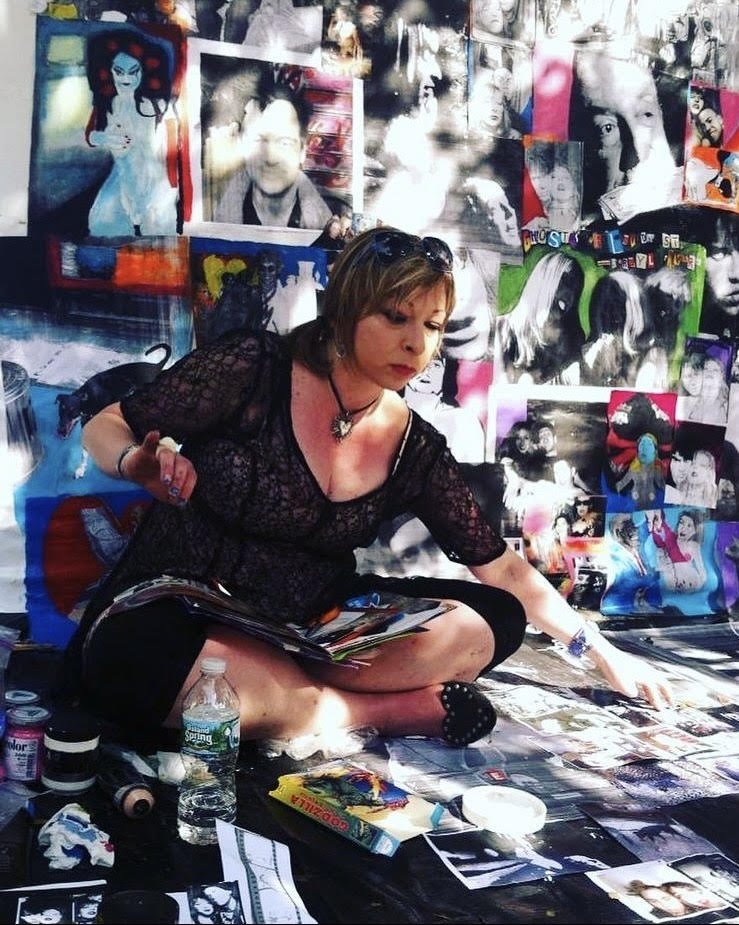
I paint cityscapes and landscapes that begin in observation but end in emotion. Working primarily in oil on canvas, and also on paper with gouache, watercolor, and ink, I create what I describe as punk expressionist paintings — scenes where historic architecture collides with graffiti and turbulent skies. I often start with a recognizable place: a building, a façade, a skyline shaped by time. Structure, perspective, and architectural integrity matter to me. But as the painting develops, something shifts. The subject gradually becomes secondary to the psychological force moving through it. What begins as a city becomes a vessel.
My work is not intended to function as a photographic record, even though observation is foundational. I am interested in what exists beneath the visible world — the emotional and existential weight embedded within place. Buildings may appear solid and permanent, yet underneath there is fragility. A skyline may seem still, but psychologically it trembles. I want the viewer to sense pressure below the surface — vulnerability beneath authority, unrest beneath order, humanity beneath structure.
Oil paint is essential to this process. Its depth, luminosity, and physical presence allow me to move between refinement and disruption. I build glazes with care, then interrupt them with raw, gestural marks. The beauty and gravity of oil anchor the work in the long tradition of painting, while its materiality allows emotion to be pressed directly into the surface.
When working on paper, I turn to gouache, watercolor, and ink for their immediacy and unpredictability. These materials encourage a different kind of vulnerability — fluid, responsive, and instinctual. The absorbency of paper and the speed of the medium allow mood and gesture to surface quickly, often revealing raw psychological states with less mediation. Whether on canvas or paper, I am committed to allowing the material to carry feeling.
Graffiti plays a central role in the work. It represents the human mark — the voice of the overlooked, the rebellious, the punk and anarchic impulse that refuses silence. Where architecture suggests control and permanence, graffiti interrupts with urgency and defiance. It is both personal and collective: a confession, a protest, a declaration of existence. In my paintings, graffiti bridges outsider energy and fine art language.
Although I was educated at the Rhode Island School of Design, I intentionally maintain an outsider sensibility. I am drawn to the friction between the schooled and the unschooled — technical foundation meeting instinct, tradition colliding with raw expression. The tension between refinement and abrasion mirrors the psychological tension within the imagery itself.
Ultimately, my work asks what lies beneath what we build — socially, emotionally, and internally. It is less about the specific city and more about the human condition embedded in paint. The architecture holds memory. The sky carries mood. The surface absorbs feeling. The painting becomes not a place, but a state of being.